Decoding the Future: A Deep Dive into Video Synthesis
Ever wondered how those mind-blowing special effects in movies are created? Or perhaps you're curious about the tech behind those realistic AI-generated videos? Well, you've stumbled upon the right place. At RayMish Technology Solutions, we're constantly exploring the bleeding edge of tech, and one of the most fascinating areas is video synthesis.
What Exactly is Video Synthesis? Understanding the Basics
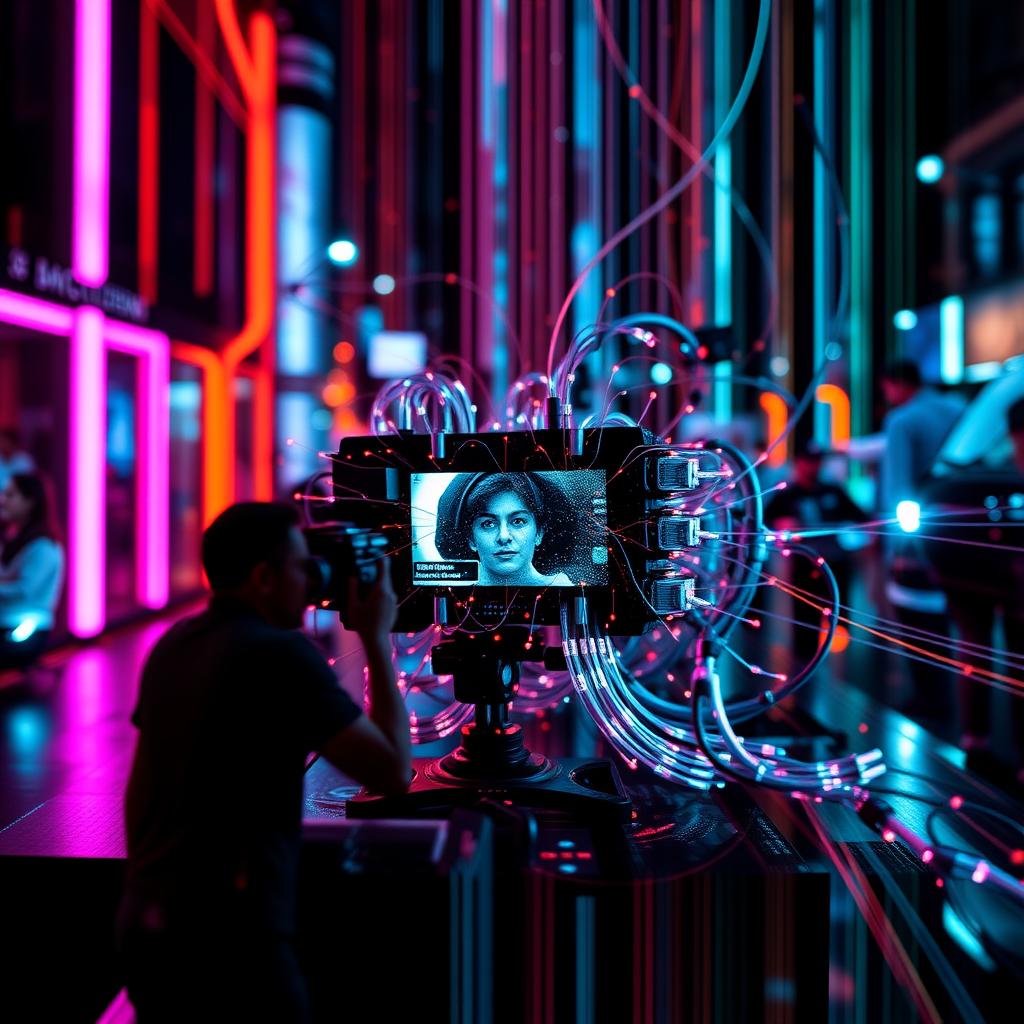
In simple terms, video synthesis is the process of generating or modifying video content using computational methods. Instead of just recording footage with a camera, video synthesis allows us to construct entirely new scenes or significantly alter existing ones. This technology leverages AI, machine learning, and computer vision to create photorealistic visuals, animations, and special effects that were previously impossible.
How Video Synthesis Works: The Tech Behind the Magic
The process is pretty complex, involving a combination of advanced techniques. At its heart, video synthesis relies heavily on algorithms. Machine learning models, particularly deep neural networks, play a pivotal role. These models are trained on vast datasets of videos and images, learning to recognise patterns and relationships within the visual data.
For example, a generative adversarial network (GAN) might be used to create new video frames. This involves two neural networks: a generator that creates the video frames, and a discriminator that tries to identify the fake frames. The generator and discriminator are in constant competition, which leads the generator to produce increasingly realistic video.
Real-World Applications of Video Synthesis: Where is it Used?
The applications of video synthesis are vast and span numerous industries:
- Entertainment: Special effects (VFX) in films and television rely heavily on video synthesis
- Marketing and Advertising: Creating personalised video ads, generating product demonstrations, and producing engaging social media content
- Healthcare: Generating realistic medical simulations for training surgeons or visualizing complex medical procedures
The Future of Video Synthesis: What to Expect
As AI and machine learning continue to advance, the future of video synthesis is looking incredibly exciting. We can expect to see even more realistic and sophisticated generated content. One area to watch is the integration of video synthesis with other technologies, such as augmented reality (AR) and virtual reality (VR).
FAQs About Video Synthesis
Is video synthesis the same as deepfakes?
Not exactly, though they use similar underlying technologies. Deepfakes are a specific application of video synthesis focused on replacing a person's face or likeness with another.
What are the ethical considerations?
The use of video synthesis raises important ethical questions, particularly concerning the spread of misinformation and the potential for misuse.
What skills are needed to work with video synthesis?
A background in computer science, machine learning, or computer graphics is highly beneficial. Knowledge of programming languages like Python is also important.